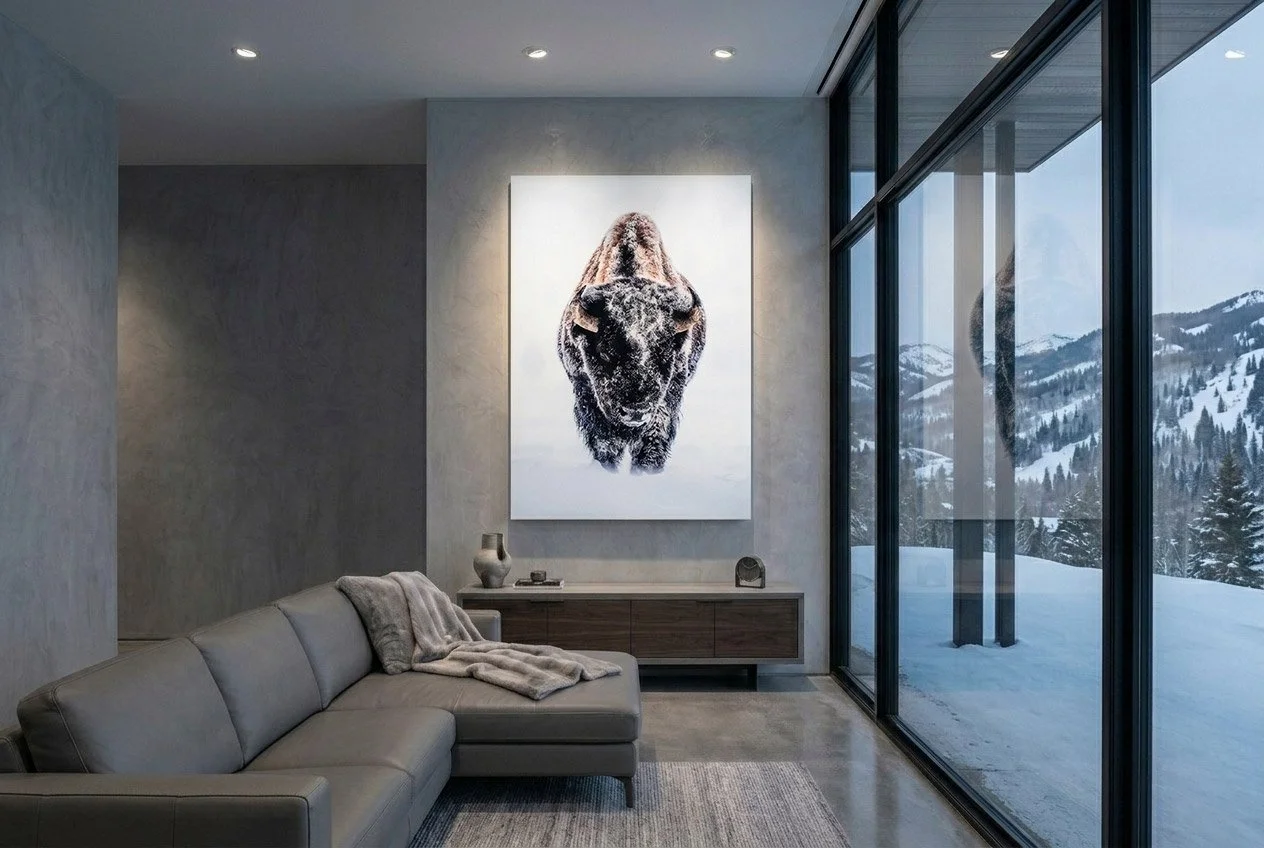
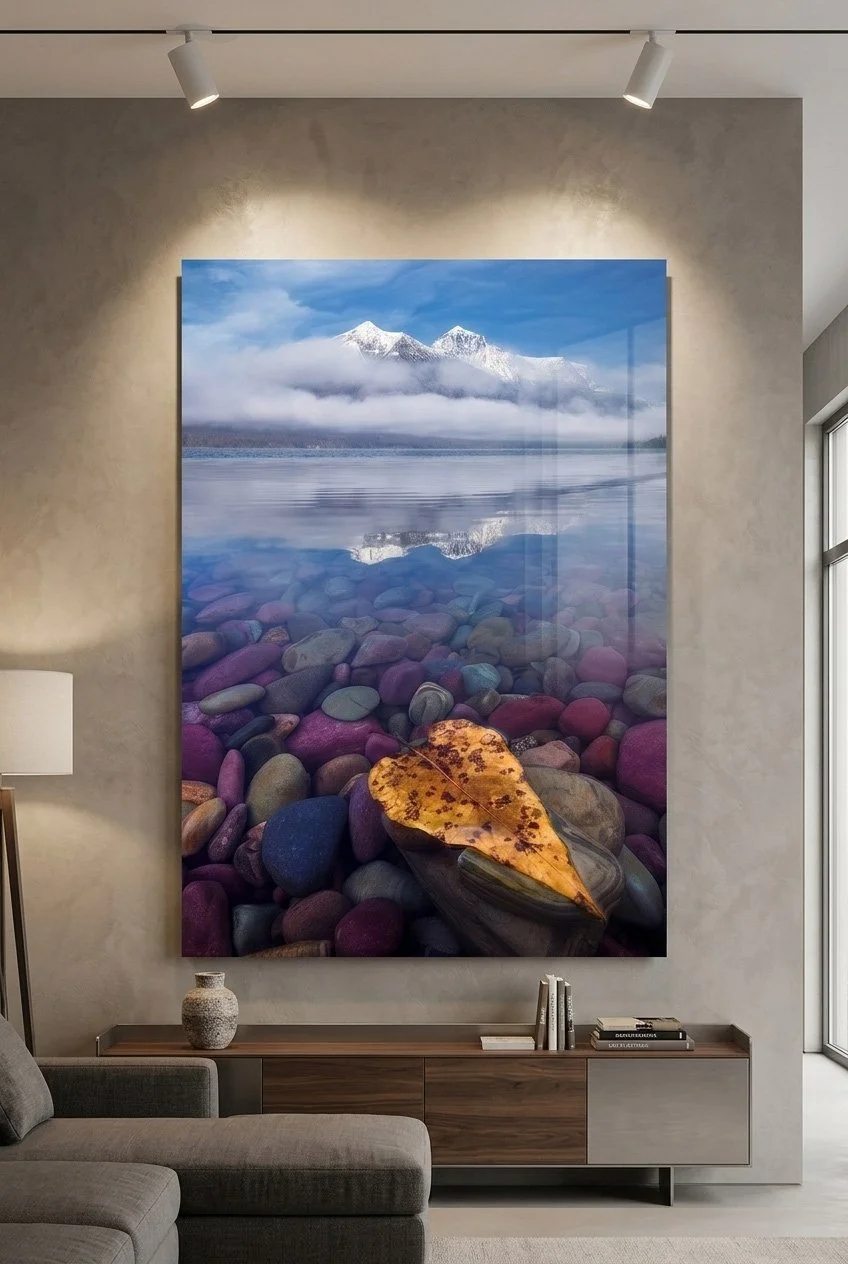
Now that you’ve selected the perfect photograph to elevate your space, choosing the right lighting is key to showcasing it at its fullest. Proper illumination can turn a piece from easily overlooked into the centerpiece of any room. Soft, focused lighting enhances subtle details, tonal shifts, and color nuances that might otherwise go unnoticed. There are several lighting options to consider, each with unique advantages. The goal is to highlight your artwork beautifully while complementing your room’s overall decor. Let’s explore the different lighting approaches available to you.
Overhead Accent Lighting
Ceiling-mounted spotlights provide a versatile and effective way to highlight artwork. These fixtures can be surface mounted to contribute to the room’s overall design or recessed for a sleek, minimalist look with no visible hardware. For optimal results, the lights should be positioned at roughly a 30-degree angle aimed at the center of the piece, delivering a soft, even wash of illumination across the artwork. This angle minimizes shadows on the wall below and reduces glare that can occur when fixtures are placed too far from the surface, ensuring the print is showcased with clarity and balance.
Adjustable Gallery Track Lighting
Track lighting offers many of the same advantages as traditional ceiling-mounted lights, with added flexibility for rooms featuring multiple artworks or for collectors who like to rotate or refresh their displays. It is often easier to install and typically more cost-effective than individual ceiling fixtures. Modern track lighting has evolved far beyond the bulky systems of the past, offering sleek, contemporary designs. Still, it’s important to consider how the track itself interacts with the room’s overall aesthetic, ensuring it complements rather than distracts from your artwork.
Protecting Your Investment
Preserving your artwork should always be a key consideration when choosing lighting. Photographic prints, while more resilient than historic paintings, are still vulnerable to fading and color shifts if exposed to improper light over time. Careful placement and thoughtful lighting choices can help maintain the integrity and vibrancy of your prints for years to come.
Here are some essential guidelines to protect your artwork:
Keep Artwork Out of Direct Sunlight – Even prints with UV coatings can fade over time when exposed to direct sunlight or strong natural light for extended periods of time.
Avoid Heat from Light Sources – Lights positioned too close can damage the print through heat. Test by placing your hand near the surface; if it feels warm, the light is too close.
Skip Fluorescent Lighting – Fluorescent bulbs emit high levels of UV radiation, which accelerates fading and alters color balance over time.
Following these precautions ensures your prints remain as vibrant and striking as the day they were created.
Lighting Considerations: Halogen or LED?
Halogen bulbs have long been a staple in galleries worldwide, prized for their bright, crisp white light and excellent color rendering compared to traditional incandescent bulbs. However, halogens emit significant amounts of infrared (IR) and ultraviolet (UV) radiation, which can gradually damage artwork if the bulbs are placed too close. They also generate intense heat, making them a burn hazard and less practical for long-term use.
In contrast, LED lighting has advanced significantly in recent years. Early LEDs were criticized for their cool, bluish tone, but modern options now offer a wide range of color temperatures that closely mimic natural light. While LEDs may have a higher upfront cost, they are energy-efficient, produce minimal heat, and emit little to no UV or IR radiation—making them a safer, more sustainable choice for illuminating and preserving your artwork over time.
Showcasing Artwork with LED Lighting
Lighting your art and photography is about far more than simply shining a bright bulb on the wall. The right lighting can bring out the full depth, color, and detail of a piece, while the wrong choice can flatten or distort its appearance. Accurate color rendering is essential if you want your prints to truly shine.
Today, LED technology has transformed how we light artwork. Unlike older options like tungsten, fluorescent, or halogen bulbs—which can cast warm, uneven tones or emit damaging heat and UV rays—modern LEDs provide a cool, natural light that closely resembles daylight. This makes it easier than ever to showcase your art with clarity and precision.
LEDs excel in the color range most important for fine art photography (around 5000K–5300K), rendering hues accurately without the yellow or orange cast that can make colors appear muted or distorted. Unlike halogen lights, LEDs run cool and emit virtually no UV radiation, protecting your prints from long-term damage and preserving their vibrancy for years to come.
In addition to their superior color quality, LEDs are compact, lightweight, and highly versatile. They work beautifully in track lighting, recessed fixtures, or adjustable setups, offering flexible installation options that are both practical and cost-effective. With the right LED lighting, your artwork can be displayed exactly as it was intended—true to color, detail, and form.