
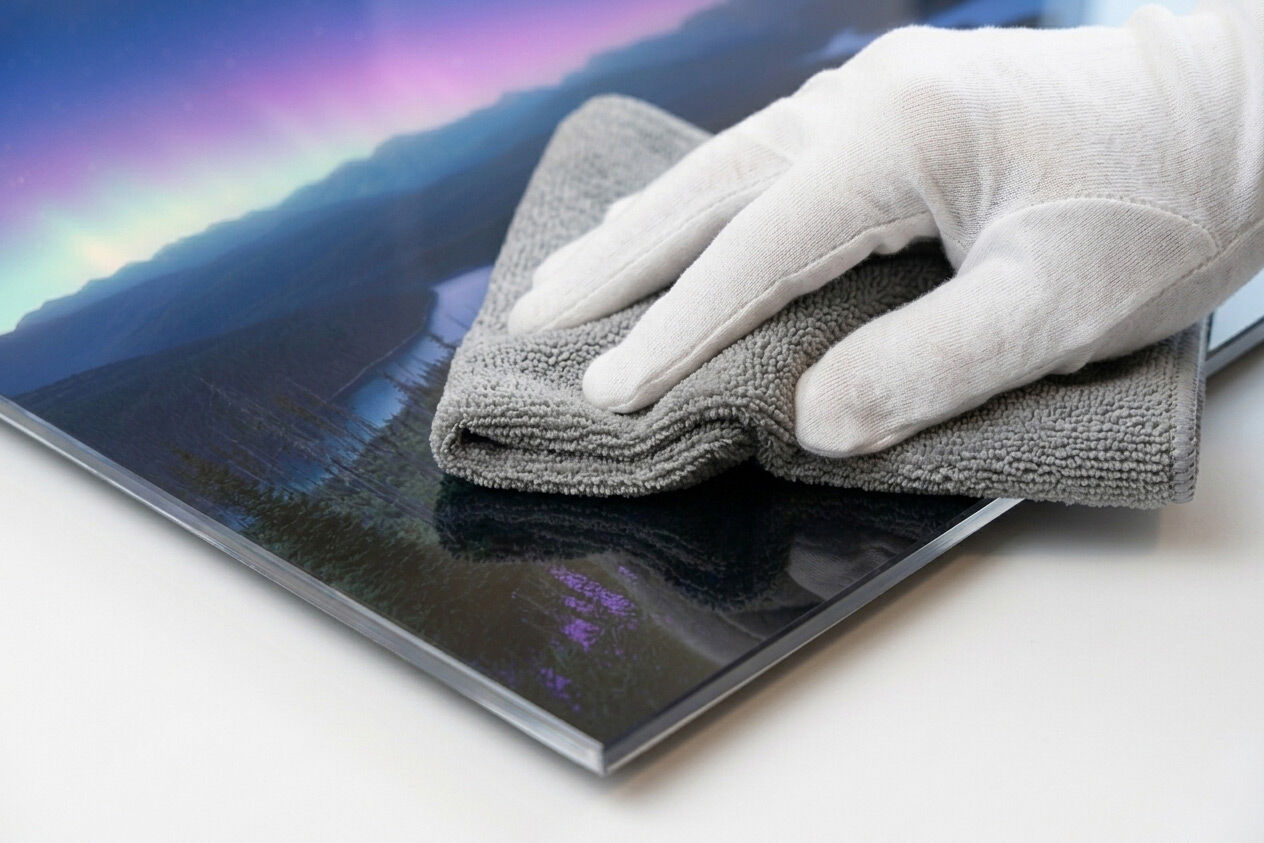
Caring for Your Fine Art Prints
Each piece is crafted to museum-quality standards using archival materials designed to last for generations. With proper care, your artwork will retain its depth, color, and presence for decades.
General Care Guidelines
- Display artwork away from direct, prolonged sunlight whenever possible to preserve color integrity.
- Avoid areas with high humidity or extreme temperature fluctuations (such as bathrooms or above fireplaces).
- Handle prints with clean, dry hands or cotton gloves to prevent oils or residue from transferring to the surface.
- When moving or installing, support the piece from both sides to avoid unnecessary stress on the material.
Exception — Modern Materials
Select contemporary mediums are engineered for more demanding environments. Both ChromaLuxe Metal Prints and TruLife Acrylic Prints are well-suited for bathrooms and other high-humidity spaces.
- Their non-porous surfaces resist moisture, steam, and condensation.
- They will not warp, swell, or degrade under normal bathroom conditions.
- Surfaces remain easy to clean and maintain over time.
This makes them an ideal choice for collectors seeking to extend artwork into spaces traditionally avoided by framed fine art paper prints.
Fine Art Paper Prints (Cotton Rag Baryta)
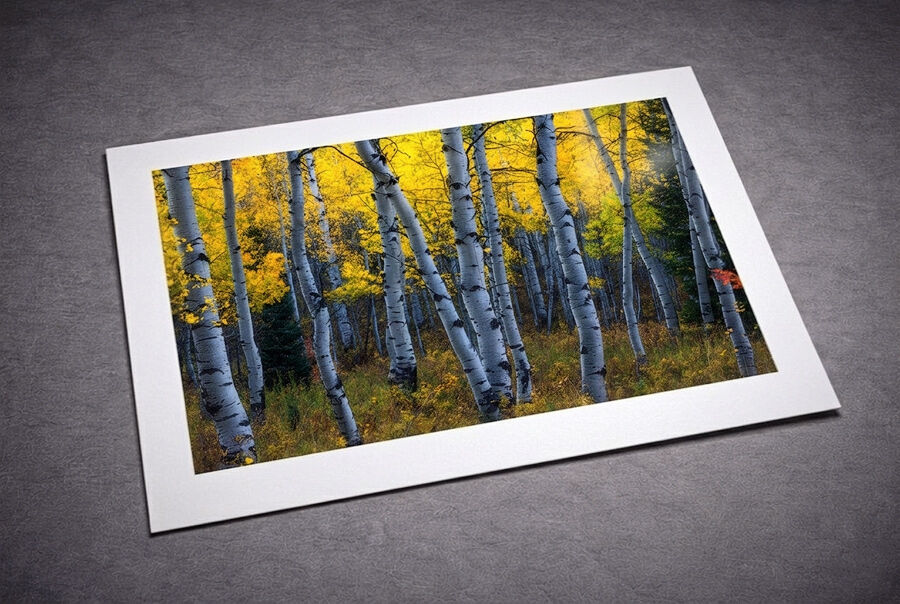
Printed on museum-grade 100% cotton baryta paper, these works offer exceptional tonal depth, rich blacks, and a refined, lustre surface. As a traditional fine art medium, they require a more careful approach to handling and display.
Care:
- Handle only by the edges using clean, dry hands or cotton gloves.
- For ultimate longevity, frame behind archival glass or acrylic to protect from dust, moisture, and UV exposure.
- Display in stable, low-humidity environments away from direct sunlight.
Avoid:
- Touching the printed surface, which can mark or alter the finish.
- Unframed display in open air, especially in high-traffic or humid spaces.
- Rolling, bending, or applying pressure to the paper.
Preservation:
When properly framed and displayed, cotton rag baryta prints are highly archival and designed to last for generations. Thoughtful care ensures the paper retains its subtle texture, depth, and tonal integrity over time.
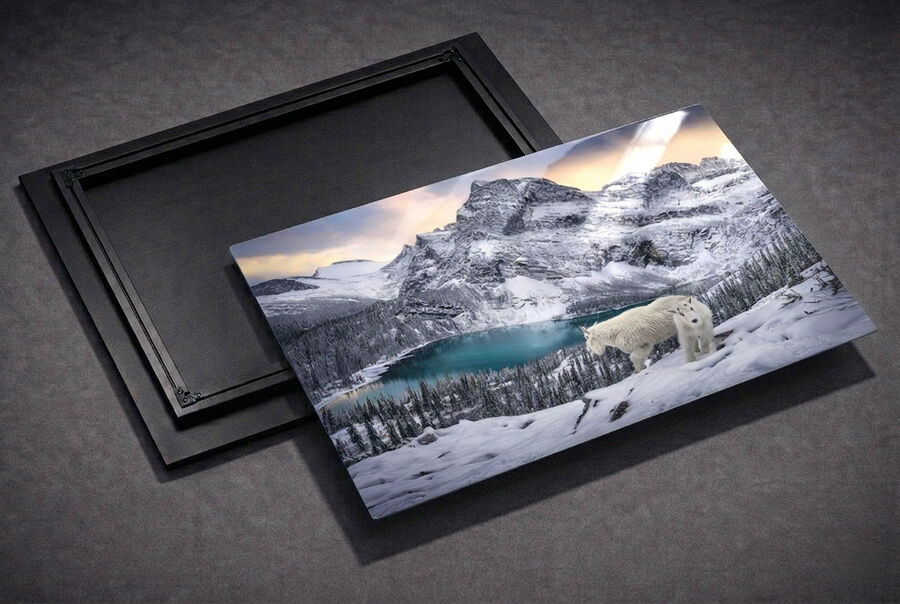
Chromaluxe Metal Prints
ChromaLuxe Metal Prints are infused with dyes beneath a sealed, high-gloss coating, making them one of the most resilient fine art mediums available. They are resistant to moisture, chemicals, and everyday handling.
Care:
- Use a soft, lint-free microfiber cloth.
- For light dust, wipe gently with a dry cloth.
- For fingerprints or smudges, lightly dampen the cloth with water or a mild, ammonia-free glass cleaner.
- Wipe with minimal pressure in smooth, even motions.
- If needed, the surface can tolerate stronger cleaners, though gentler methods are always recommended first.
Avoid:
- Abrasive materials (paper towels, rough fabrics).
- Harsh chemical cleaners or solvents.
- Unnecessary pressure during cleaning.
- Spraying cleaner directly onto the print—always apply to the cloth first.
Engineered for longevity, these pieces require minimal upkeep while preserving their clarity and depth over time.
TruLife® Acrylic Prints
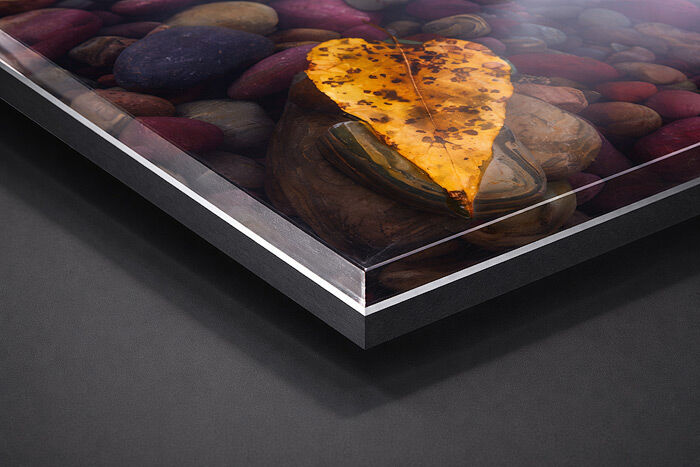
TruLife® Acrylic Prints are among the most refined contemporary presentation styles, offering exceptional optical clarity, depth, and color intensity. The polished acrylic surface enhances detail and contrast, creating a luminous, almost dimensional viewing experience.
Care:
- Use a clean, high-quality microfiber cloth designed for acrylic or optical surfaces.
- Gently remove dust before wiping to prevent micro-scratches.
- If needed, use a small amount of acrylic-safe cleaner or water.
- Wipe lightly in straight motions—avoid circular pressure.
Avoid:
- Standard glass cleaners containing ammonia, which can damage the acrylic.
- Dry wiping when dust or debris is present. This can cause fine scratches.
- Excess pressure, which may create swirl marks over time.
Long-Term Preservation
All materials used are archival and engineered for longevity, but environment plays a critical role in preservation.
- Maintain stable indoor conditions whenever possible.
- Avoid prolonged exposure to direct UV light, even with protective coatings.
- Periodically inspect hanging hardware to ensure the artwork remains secure and properly aligned.
A Final Note
Fine art is meant to be lived with and enjoyed. A small amount of care ensures that your piece continues to reflect the same richness, detail, and atmosphere as the day it was created.